

Eyecare
We Offer a Range of Eyecare Services...
From NHS sight tests to specialist eyecare services you can find them all here.
Sight Tests
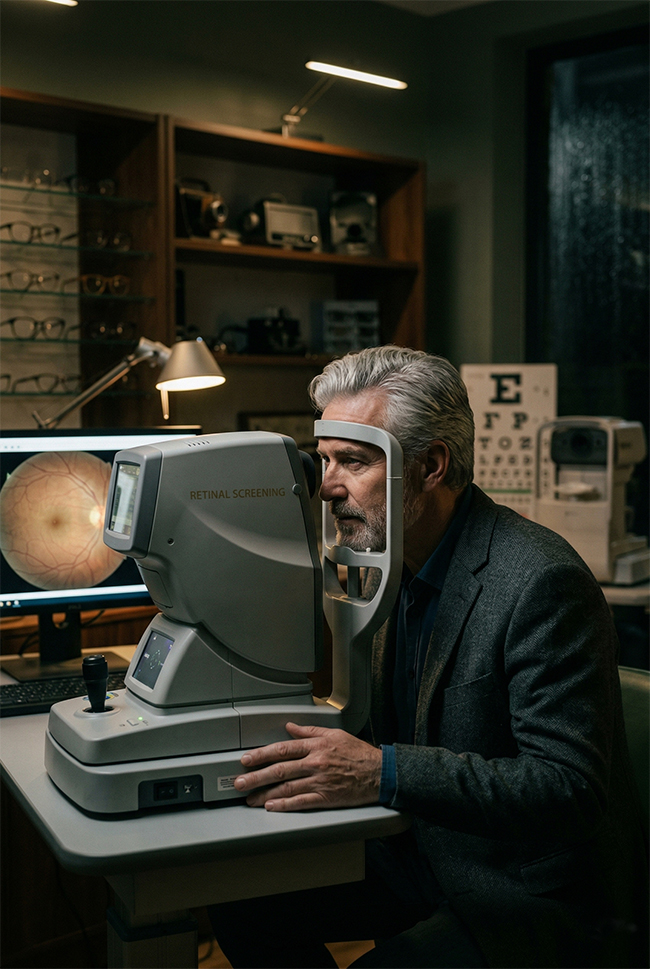
We carry out NHS Eye examinations and private sight tests during which various tests are done, depending on the patients individual needs. We also have a digital camera which photographs the back of the eye keeping an accurate record of any changes occurring. There is an extra charge of £10.00 for this service.
Specialist Eyecare
At our Mansfield branch we are part of the diabetic retinal screening programme, therefore able to examine diabetic patients.
Our optometrist can advise on any conditions relating to health of the eye, e.g. dry eye, blocked glands, and blocked tear ducts then treat accordingly.
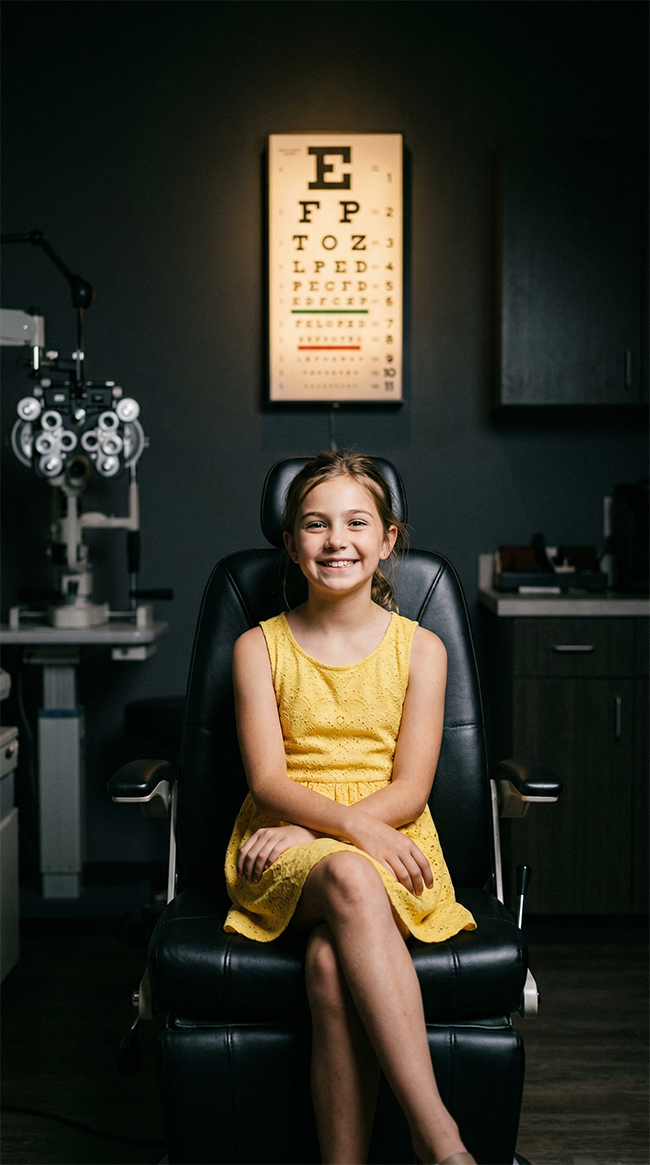
Children's Eyecare
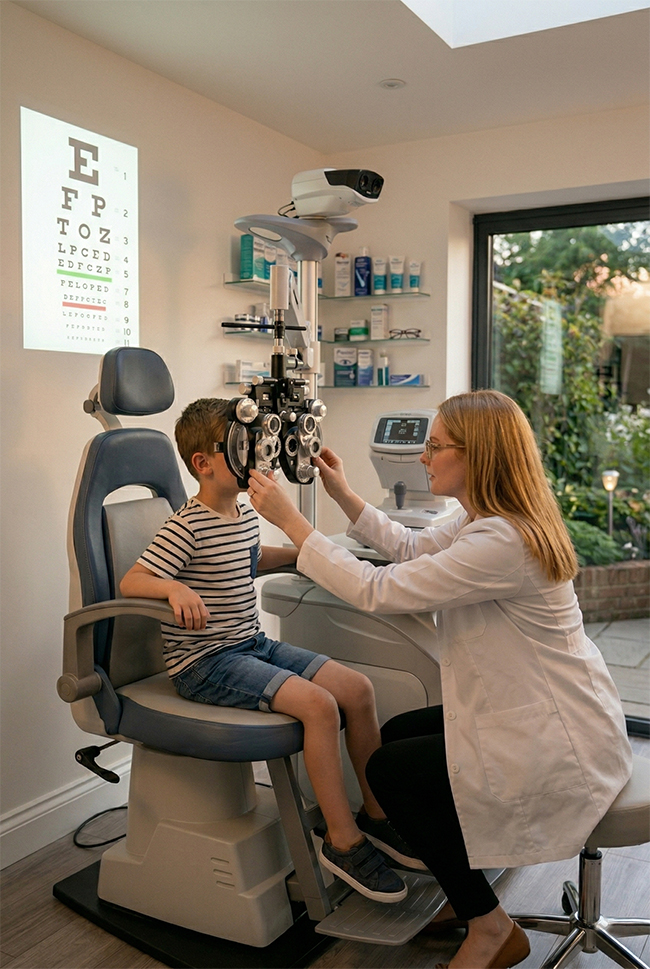
Regular eye examinations are important for the health of your childs eyes. Children with poor eyesight can struggle at school, therefore children under the age of 16 and full time students under 19 have free sight tests and are issued with vouchers towards the cost of their lenses if necessary. We offer a wide selection of frames to suit all ages.
Children's Eyecare
Good vision is critical to a child’s early educational, functional, and social development. Parents should be aware that it is essential to address the child’s visual needs as early as possible. Healthy sight can contribute to a healthy start in life.
The eyes continue to develop during childhood. The majority of children at birth are long sighted (hypermetropic) which, if within normal limits, will correct itself as the child matures. However if a refractive error is not properly corrected there is a risk of permanently poor vision.
Children’s eyes, as well as their visual needs, differ from those of adults in a number of important ways.
A child’s immature visual system is more prone to irreversible damage. It is therefore important to have your child regularly assessed by a registered optical professional.
The main childhood eye problems relate to improper development of the visual system. Conditions such as:
- amblyopia (lazy eye),
- strabismus (squint)
- uncorrected refractive error (short sightedness [myopia], long sightedness and astigmatism) are the most common.
They are also all related. If a child has a squint, or if one eye has a significantly different refractive from the other, this will lead, if uncorrected, to a lazy eye. The less dominant eye is effectively “switched off” and does not develop properly. The child accommodates to use the eye which is least long-sighted which leaves the other eye with reduced visual acuity.
The Critical Period
A child’s visual system develops over the first seven years of their life. Amblyopia is best treated before the age of four but continued improvement can be made up to the age of seven; after this critical period perfect vision is difficult to achieve.
Amblyopia and squints (strabismus) are evident by the age of four and may be detected by the parent, health visitor or a teacher, but if they are not picked up and if a child has an uncorrected refractive error it will impact on the child’s ability to perform well at school. It may also hinder the child in later life to enter certain professions where good eyesight is a prime requirement.
What You Should Watch For
- Children screwing their eyes up or rubbing their eyes
- Children who are clumsy, bump into things
- Children who have problems with coordination eg catching or kicking a ball
- Children sitting very close to the TV or with their nose too close to a page to read
- Children who refuse to read or have difficulties concentrating
- A child that perceives that text on a page doesn’t stay in a straight line but slopes
- A child who is introverted or a “day-dreamer”
- A child who is disruptive or have a short attention span
- A child undergoing long-term medication – there are a number of different medications which children which may have eye-related side effects and could impact negatively on healthy sight eg steroids, ADHD drugs, anti-bedwetting drugs, antihistamines, anti-depressants
- Children complaining of headaches – most headaches don’t have an ocular cause; however some children may have an uncorrected refractive error and/or they may have a binocular vision problem that causes headache
FREE NHS Sight Tests
In the UK all children under-16 and those under-19 and in full-time education qualify for a free NHS-funded sight test. Remarkably only 22 per cent of under-16s have ever had a sight test.
Dispensing
A dispensing optician can ensure children’s spectacles fit properly, look great and provide the best vision possible and there’s a wide variety of attractive children's frames to choose from.
Many children, especially those who participate in a sport or those entering their teenage years can also opt to wear contact lenses.
Diabetes
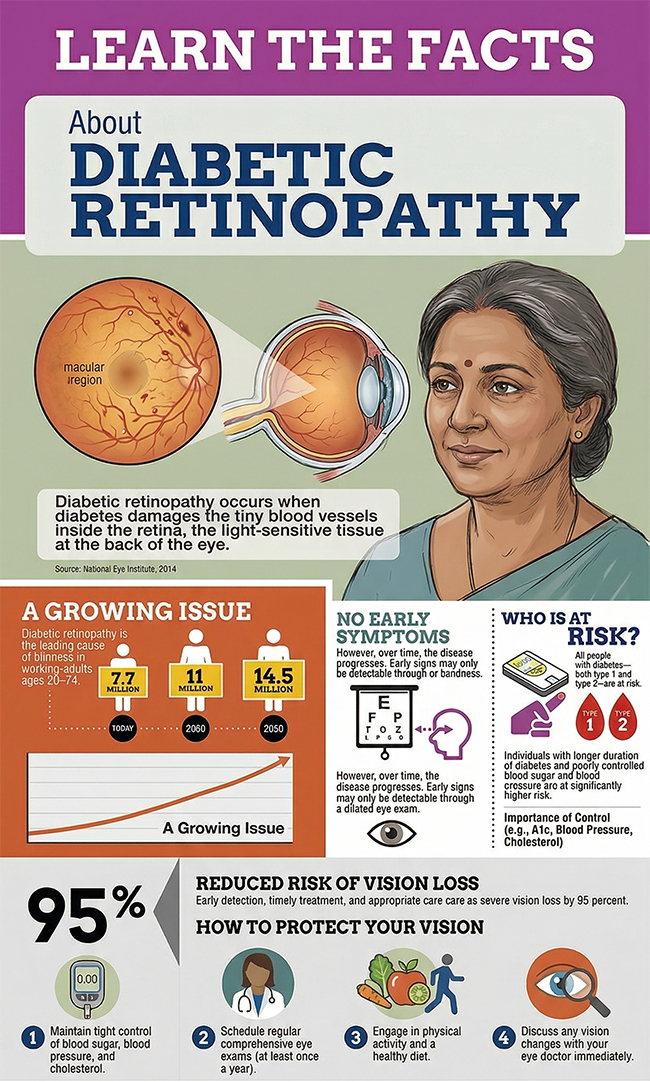
Diabetic retinopathy is the most common form of diabetic eye disease. Diabetic retinopathy usually only affects people who have had diabetes (diagnosed or undiagnosed) for a significant number of years.
Retinopathy can affect all diabetics and becomes particularly dangerous, increasing the risk of blindness, if it is left untreated.
The risk of developing diabetic retinopathy is known to increase with age as well with less well controlled blood sugar and blood pressure level.
According to the NHS, 1,280 new cases of blindness caused by diabetic retinopathy are reported each year in England alone, while a further 4,200 people in the country are thought to be at risk of retinopathy-related vision loss.
All people with diabetes should have a dilated eye examination at least once every year to check for diabetic retinopathy.
What is diabetic retinopathy?
Diabetic retinopathy occurs when changes in blood glucose levels cause changes in retinal blood vessels. In some cases, these vessels will swell up (macular oedema) and leak fluid into the rear of the eye.
In other cases, abnormal blood vessels will grow on the surface of the retina.
Unless treated, diabetic retinopathy can gradually become more serious and progress from ‘background retinopathy’ to seriously affecting vision and can lead to blindness.
Diabetic retinopathy includes 3 different types:
- Background retinopathy
- Diabetic maculopathy
- Proliferative retinopathy
What are the symptoms of diabetic retinopathy?
Like many conditions of this nature, the early stages of diabetic retinopathy may occur without symptoms and without pain. An actual influence on the vision will not occur until the disease advances.
Macular oedema can result from maculopathy and affect vision occurs if leaking fluid causes the macular to swell. New vessels on the retina can prompt bleeding, which can also block vision in some cases.
Symptoms may only become noticeable once the disease advances, but the typical symptoms of retinopathy to look out for include:
- Sudden changes in vision / blurred vision
- Eye floaters and spots
- Double vision
- Eye pain
How is diabetic retinopathy caused?
Diabetic retinopathy is caused by prolonged high blood glucose levels. Over time, high sugar glucose levels can weaken and damage the small blood vessels within the retina.
This may cause haemorrhages, exudates and even swelling of the retina.
This then starves the retina of oxygen, and abnormal vessels may grow. Good blood glucose control helps to lower diabetes retinopathy risks.
Am I at risk from diabetic retinopathy?
Diabetic retinopathy risk factors include the following.
If any of the below affect you it’s worth having an retinopathy screening examination as quickly as possible.
- Poor blood glucose control
- Protein in urine
- High blood pressure
- Prolonged diabetes
- Raised fats (triglycerides) in the blood
Anyone suffering from diabetes faces the risk of developing diabetic retinopathy and other diabetes complications.
The longer a person has diabetes, the greater the risk of developing diabetic retinopathy becomes. However, keeping blood glucose levels well controlled can help to significantly slow down the development of retinopathy.
People with diabetes should, however, be aware that a rapid improvement in blood glucose levels can lead to a worsening of retinopathy. A rapid improvement in blood glucose levels in this case is defined as a drop in HbA1c of 30 mmol/mol or 3%.